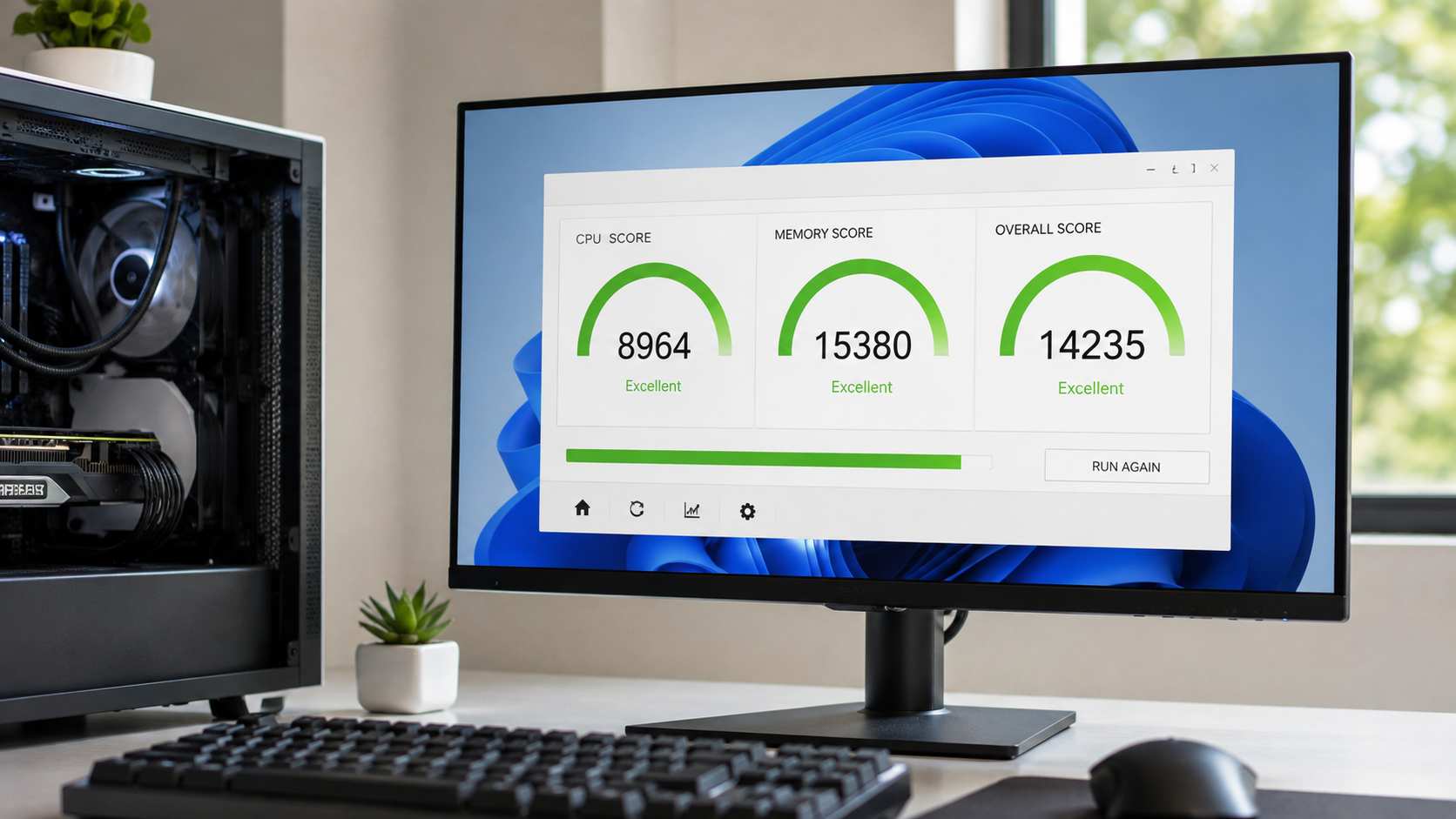
How Do You Know if a Speed Fix Actually Worked?
Most people cannot tell, which is exactly why cleaner software keeps selling. Three simple measurements, taken before and after, settle it properly.
Working out why a machine has got slower, and the checks worth making in order before spending anything.
Most people cannot tell, which is exactly why cleaner software keeps selling. Three simple measurements, taken before and after, settle it properly.
A machine bought last month should not be struggling. Usually it is not faulty - it is either still setting itself up, or it was never as fast as the box implied.
Storage is the most common bottleneck in an older machine and the one people check last. There are three questions, and none of them needs a paid tool.
Freezing is not the same as slow, and the difference matters. A machine that stops dead is telling you something more specific than one that merely drags.
If everything else is fine and only web pages crawl, the computer probably is not the problem. Here is how to work out which part of the chain is.
It is the advice everyone gives and nobody explains, which makes it sound like a superstition. It is not - and there is a reason Restart works better than Shut Down.
It is deliberate, it is protective, and it is one of the few slowdowns you can often fix with a can of compressed air and ten minutes.
Everything reads low, the machine still crawls, and the obvious explanation is missing. There are five causes that hide from the numbers, and they are all findable.
They are the most advertised answer to a slow computer and the least effective. Here is what they actually do, what they claim to do, and why the gap matters.
Sometimes, but far less often than people assume - and the fear of it sells a great deal of software nobody needs. Here is how to tell the difference.
Software problems are free to fix and hardware problems are not, so it is worth knowing which one you have before you start. There are four reliable tells.
There is a sensible order to this, and most people start in the wrong place. Five checks, from the ones that cost nothing to the ones that cost money.